The Extreme Temperatures of the Sun
پیشرفته (C2)
در این پادکست سطح C2، با کلمات و جملات بسیار پیشرفته درباره دمای خورشید، لایههای آن، فرآیند همجوشی هستهای و اهمیت این ستاره در حیات زمین آشنا میشوید. این محتوا برای زبانآموزانی که به موضوعات علمی و فضایی علاقه دارند، بسیار مناسب است.
متن پادکست
The Sun is our nearest and most important star.
It provides the light and heat that sustain life on Earth.
But the temperatures on the Sun are truly extreme.
They are beyond anything we experience on our planet.
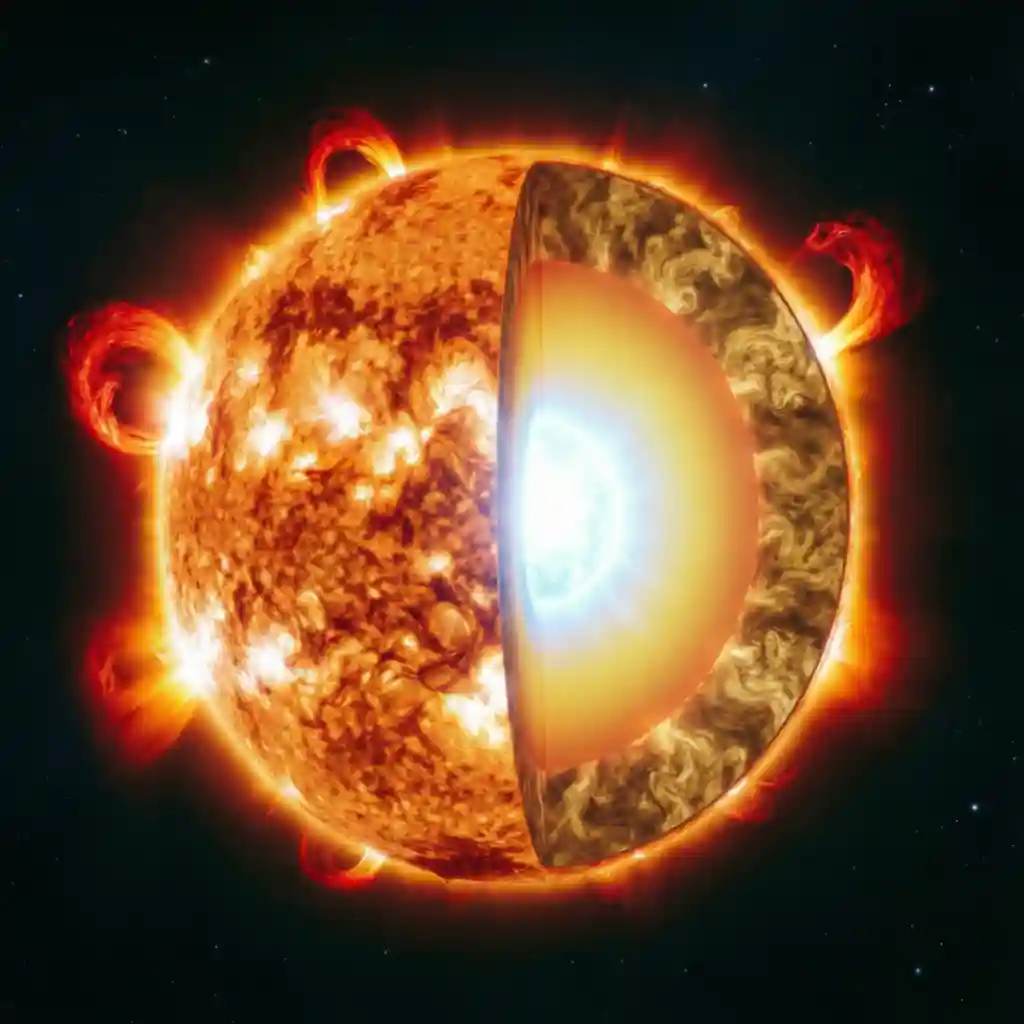
At the surface, the temperature is about 5,500 degrees Celsius.
This is called the photosphere [citation:1][citation:8].
It is the layer that we can see from Earth.
It is hotter than any volcano or fire on our planet.
It is about 100 times hotter than the Earth's core.
But the surface is not the hottest part of the Sun.
The core is much hotter.
It reaches temperatures of around 15 million degrees Celsius [citation:1].
This is 1,500 times hotter than lava from a volcano [citation:1].
It is 300 times hotter than the Earth's core [citation:1].
The core is where nuclear fusion occurs.
Hydrogen atoms combine to form helium.
This process releases enormous amounts of energy.
This energy travels outward through the layers.
It eventually reaches the surface and is released as light and heat.
The temperature varies in different layers.
The photosphere is the coolest layer.
Above it is the chromosphere and the corona [citation:2][citation:4][citation:6].
The corona is the outer atmosphere.
It has temperatures of millions of degrees [citation:2].
This is much hotter than the surface below [citation:4].
The Sun's heat is generated by nuclear fusion.
This requires extremely high pressure and temperature.
Without these conditions, fusion could not occur.
The Sun has been burning for billions of years.
It will continue to shine for billions more [citation:8].
The temperature on the Sun is measured in Kelvin.
One Kelvin is equal to one degree Celsius.
Scientists use Kelvin for extremely hot objects.
The surface temperature is about 5,800 Kelvin [citation:2][citation:6].
The core is about 15 million Kelvin.
These temperatures are hard to imagine.
They are far beyond human experience.
But they are essential for life on Earth.
The Sun's heat drives our climate and weather.
It makes our planet habitable.
The energy from the Sun travels to Earth in eight minutes.
It travels at the speed of light.
By the time it reaches us, it is much cooler.
But it is still powerful enough to sustain all life.
The Sun is a reminder of the vastness of the universe.
It is a source of wonder and scientific discovery.
Understanding its temperature helps us understand the universe.
It shows us the incredible forces at work in space.
لغتنامه
extreme
بسیار شدید، افراطی
sustain
حفظ کردن، ادامه دادن
photosphere
لایه سطحی خورشید (فوتوسفر)
nuclear fusion
همجوشی هستهای
enormous
عظیم، بسیار بزرگ
corona
تاج خورشیدی (جو خارجی خورشید)
habitable
قابل سکونت
vastness
وسعت عظیم، گستردگی